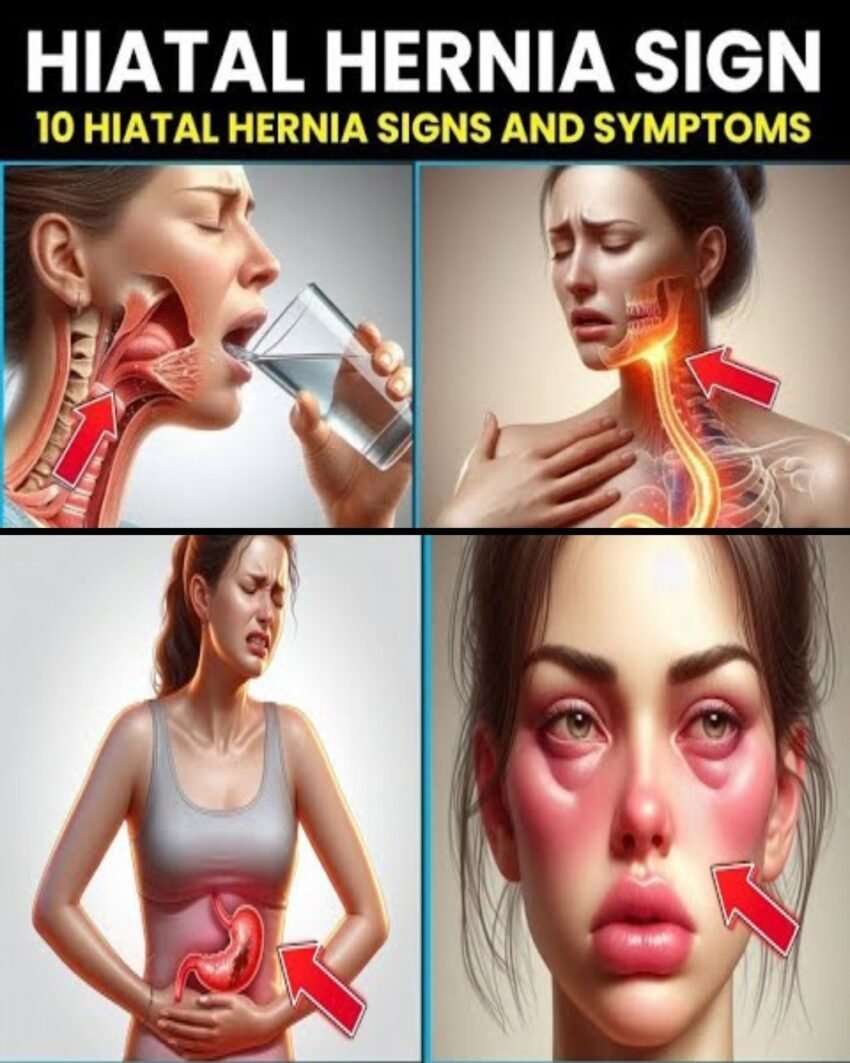
A hiatal hernia is a condition in which part of the stomach pushes up through the diaphragm into the chest cavity. While some people may not notice any symptoms at all, others experience a range of uncomfortable digestive and chest-related issues. Recognizing the warning signs early can help you manage the condition and prevent complications, especially when it overlaps with issues like gastroesophageal reflux disease.
Here are 10 common signs and symptoms of a hiatal hernia you should know:
1. Persistent Heartburn 🔥
One of the most common symptoms is frequent heartburn—a burning sensation in the chest, especially after eating or when lying down. This happens because stomach acid moves up into the esophagus more easily.
2. Acid Reflux
Closely related to heartburn, acid reflux involves a sour or bitter taste in the mouth as stomach acid rises upward. This symptom is often worse at night or after large meals.
3. Difficulty Swallowing (Dysphagia)
A hiatal hernia can make swallowing feel uncomfortable or like food is getting stuck in your throat or chest. This may occur due to irritation or narrowing of the esophagus.
4. Chest Pain
Some people experience chest discomfort or pain that can feel similar to heart-related issues. It’s important not to ignore this symptom, as it may require medical evaluation.
5. Regurgitation
This involves food or liquid coming back up into the mouth without nausea or vomiting. It can be unpleasant and is often linked to reflux.
6. Feeling of Fullness or Bloating
Even after eating small amounts, you may feel overly full or bloated. This happens because the stomach’s position affects normal digestion.
7. Shortness of Breath
In some cases, a large hiatal hernia can press against the lungs, making it harder to breathe comfortably—especially after meals.
8. Frequent Burping or Hiccups
Excess gas and irritation in the digestive system can lead to repeated burping or persistent hiccups.
9. Nausea or Upset Stomach
Some individuals feel mild nausea, particularly after eating. This can be due to improper digestion or acid irritation.
10. Chronic Cough or Throat Irritation
Stomach acid reaching the throat can cause a long-term cough, hoarseness, or a sore throat. Over time, this irritation can become quite bothersome.
⚠️ When to Seek Medical Help
While many hiatal hernias are manageable with lifestyle changes, you should consult a doctor if:
- Symptoms are severe or worsening
- You have trouble swallowing regularly
- There is unexplained weight loss
- You experience severe chest pain
💡 Final Thought
A hiatal hernia may not always be obvious, but its symptoms—especially those related to acid reflux—can significantly impact your quality of life. Recognizing these signs early allows you to take action through diet changes, medication, or medical care if needed. If you suspect you might have one, getting a proper diagnosis is the best first step toward relief.