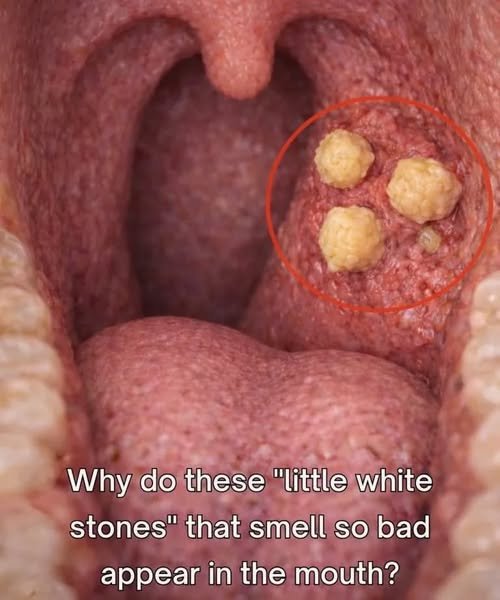
What are Tonsil Stones?
Tonsil stones are made up of a combination of bacteria, dead cells, food particles, and mucus that get trapped in the folds of the tonsils. Over time, these particles harden and form small, whitish lumps that can be seen in the throat or on the tonsils. They can vary in size, from small and barely noticeable to larger, more troublesome stones.
Why Do Tonsil Stones Cause Bad Breath?
Tonsil stones are notorious for causing bad breath (also known as halitosis) due to the following reasons:
-
Bacterial Growth: The material inside the stones often contains bacteria that produce sulfur compounds, which are responsible for the foul odor.
-
Decomposing Debris: The food particles and dead cells that get trapped in the tonsils can decompose, leading to a rotting smell.
-
Reduced Saliva Flow: Sometimes, tonsil stones can also cause a dry mouth, which can further contribute to bad breath because saliva normally helps wash away food particles and bacteria.
Other Symptoms of Tonsil Stones:
In addition to bad breath, tonsil stones can cause:
-
Sore throat or discomfort in the back of the throat
-
Difficulty swallowing (in severe cases)
-
Ear pain (referred pain from the tonsils)
-
Tonsil swelling or inflammation
-
A feeling of something being stuck in the back of the throat
-
White or yellowish lumps visible on the tonsils
How to Prevent or Treat Tonsil Stones:
-
Good Oral Hygiene: Brushing your teeth and tongue regularly, flossing, and using mouthwash can help reduce bacteria buildup and prevent the formation of tonsil stones.
-
Gargling: Gargling with warm salt water can help dislodge small stones and soothe any irritation.
-
Hydration: Staying hydrated helps keep your mouth moist and flushes out food particles and bacteria.
-
Dental Visit: Regular dental check-ups are important to ensure that your oral health is maintained.
-
Removal of Tonsil Stones: Small stones may be removed at home using a cotton swab or by gently gargling. In some cases, a healthcare professional may need to remove larger or more persistent stones.
-
Tonsillectomy: In rare cases, if tonsil stones are recurrent or causing significant discomfort, your doctor may recommend removing the tonsils through a procedure known as a tonsillectomy.
If you frequently experience tonsil stones or if they are causing you significant discomfort or bad breath, it’s a good idea to consult with a healthcare provider or an ENT (ear, nose, and throat) specialist to explore potential treatment options.