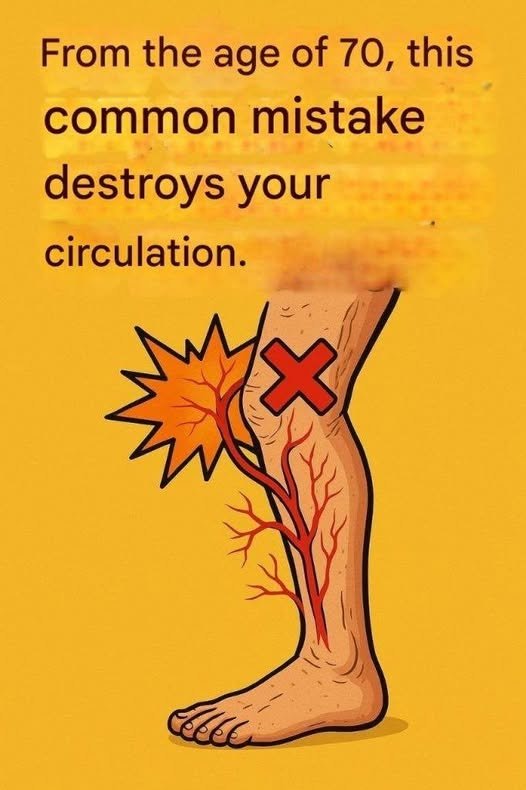
One of the most common mistakes that can ruin circulation after 70 is sitting or standing for long periods without moving.
Why Sitting or Standing for Long Periods is Harmful to Circulation:
-
Reduced Blood Flow:
-
Sitting for long periods or standing still reduces the efficiency of blood circulation, especially in the legs and lower body. When you’re in a fixed position, gravity and lack of movement can hinder the return of blood to your heart, causing it to pool in the lower extremities.
-
-
Increased Risk of Blood Clots:
-
Prolonged inactivity increases the risk of deep vein thrombosis (DVT), which is a condition where blood clots form in the deep veins of the legs. These clots can travel to the lungs and cause a pulmonary embolism, which is a life-threatening emergency.
-
-
Poor Muscle Activation:
-
Sitting or standing for extended periods causes muscle inactivity, especially in the calves. The calf muscles act as a pump to help blood flow back to the heart, but when they’re not moving, circulation slows down.
-
-
Stiffness and Pain:
-
Poor circulation due to inactivity can lead to muscle stiffness and joint pain. Over time, this can make mobility difficult and increase the risk of falls, especially in older adults.
-
-
Increased Risk of Cardiovascular Disease:
-
Chronic inactivity is a known risk factor for conditions like high blood pressure, high cholesterol, and diabetes, all of which can impair circulation and increase the risk of heart disease.
-
How to Improve Circulation After 70:
1. Move Regularly:
-
Take breaks every 30-60 minutes if you’re sitting for long periods. Stand up, stretch, and walk around to get the blood flowing.
-
Walking is one of the best forms of exercise for older adults, as it promotes circulation and strengthens the heart.
-
Leg exercises like ankle rotations, calf raises, and leg lifts can be done even while sitting to stimulate circulation.
2. Stay Active:
-
Engage in regular cardiovascular exercise like walking, swimming, or cycling to keep the blood flowing throughout the body. Even 20-30 minutes of moderate exercise daily can significantly improve circulation.
-
Strength training exercises, using light weights or resistance bands, can help build muscle and improve circulation as well.
3. Elevate Your Legs:
-
If you’ve been sitting for a while, try elevating your legs for 15-20 minutes to help improve venous return and reduce swelling in the lower legs.
-
Leg elevation helps blood return to the heart more efficiently.
4. Compression Stockings:
-
For individuals with poor circulation or varicose veins, wearing compression stockings can help support blood flow and prevent swelling by applying gentle pressure on the legs.
5. Hydration:
-
Drink plenty of water throughout the day to keep blood flow healthy and to prevent dehydration, which can lead to thicker blood and worsen circulation.
6. Healthy Diet:
-
Eat a balanced diet rich in fruits, vegetables, whole grains, lean proteins, and healthy fats like omega-3 fatty acids (found in fish, flaxseeds, and walnuts). These foods can help improve circulation, lower blood pressure, and support overall heart health.
-
Limit salt intake to prevent high blood pressure, which can negatively impact circulation.
7. Quit Smoking:
-
Smoking damages blood vessels and significantly impairs circulation. If you smoke, quitting is one of the best things you can do for your vascular health and overall circulation.
Signs of Poor Circulation to Watch For:
-
Swelling in the legs, ankles, or feet.
-
Cold hands and feet or extremities that feel numb or tingling.
-
Fatigue or feeling lightheaded.
-
Varicose veins or visible swelling in veins.
-
Pain or cramping in the legs, especially when walking or standing.
-
Skin discoloration, like a bluish tint on the extremities.
If you experience any of these symptoms regularly, it’s important to see a healthcare professional for evaluation and treatment.
Final Thoughts:
As we age, maintaining good circulation is crucial for overall health and mobility. The mistake of sitting or standing for long periods without moving is common, but it can significantly affect circulation, leading to potential health issues. Regular movement, a healthy diet, hydration, and appropriate treatments can go a long way in supporting healthy circulation, particularly as you reach and exceed the age of 70.