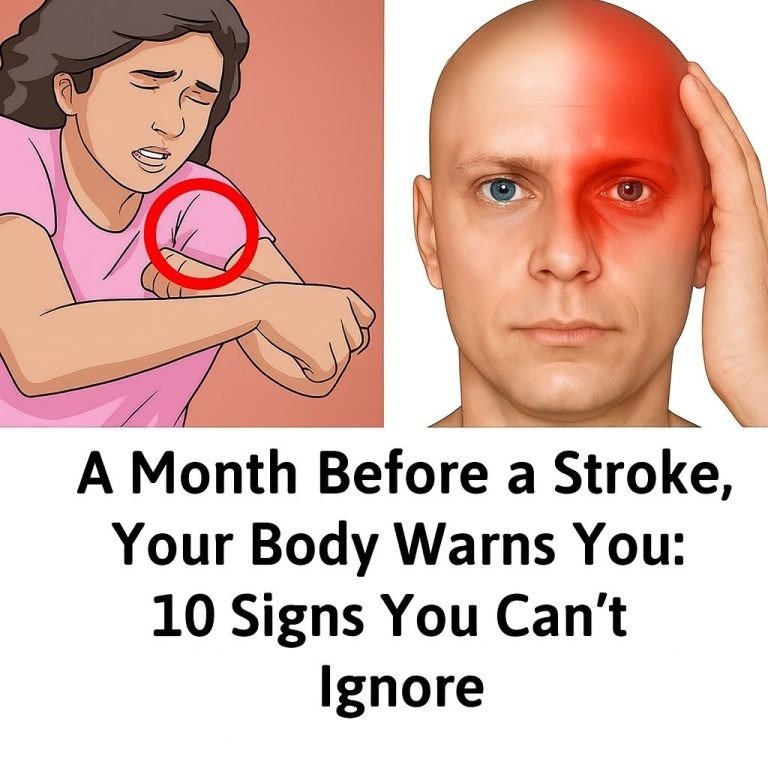
That headline is sensational, but it’s true that the body can show warning signs weeks to days before a stroke—especially mini-strokes (TIAs). Here’s the medically accurate version, without the fear-mongering:
10 Possible Warning Signs Before a Stroke
1. Transient weakness or numbness
- Face, arm, or leg—often on one side
- Comes and goes (minutes to hours)
2. Brief trouble speaking or understanding
- Slurred speech
- Trouble finding words
- Feeling confused suddenly
3. Sudden vision problems
- Blurred, double vision
- Loss of vision in one eye (“curtain coming down”)
4. Unexplained dizziness or loss of balance
- Especially if new and severe
- More concerning when paired with other symptoms
5. Severe headache with no known cause
- Especially sudden and intense (“worst headache of your life”)
- More typical of hemorrhagic stroke
6. Sudden fatigue or weakness
- Out of proportion to activity
- Not relieved by rest
7. Episodes of confusion or brain fog
- Short-lived but noticeable changes in thinking
8. Difficulty swallowing
- Sudden onset, unexplained
9. Chest pain or heart rhythm issues
- Especially with atrial fibrillation, a major stroke risk
10. Repeated TIAs (“mini-strokes”)
- Symptoms resolve within 24 hours
- Huge warning sign—a full stroke may follow within days or weeks
🚨 VERY IMPORTANT
- TIAs are medical emergencies, even if symptoms disappear
- About 1 in 3 people who have a TIA will have a stroke later if untreated
Use FAST to recognize a stroke
- Face drooping
- Arm weakness
- Speech difficulty
- Time to call emergency services immediately
Major stroke risk factors
- High blood pressure (biggest one)
- Diabetes
- Smoking
- High cholesterol
- Atrial fibrillation
- Obesity & inactivity
What social media often gets wrong
❌ “You’ll always feel warnings a month before”
✅ Some people do—but many do not
❌ “You can wait and see”
✅ Any sudden neurological symptom = urgent care
Bottom line
Your body may warn you—but never rely on that.
If symptoms appear, even briefly, get medical help immediately.
If you want, I can:
- Explain TIA vs stroke
- Help you assess personal risk factors
- Review blood pressure or cholesterol numbers
Just tell me.