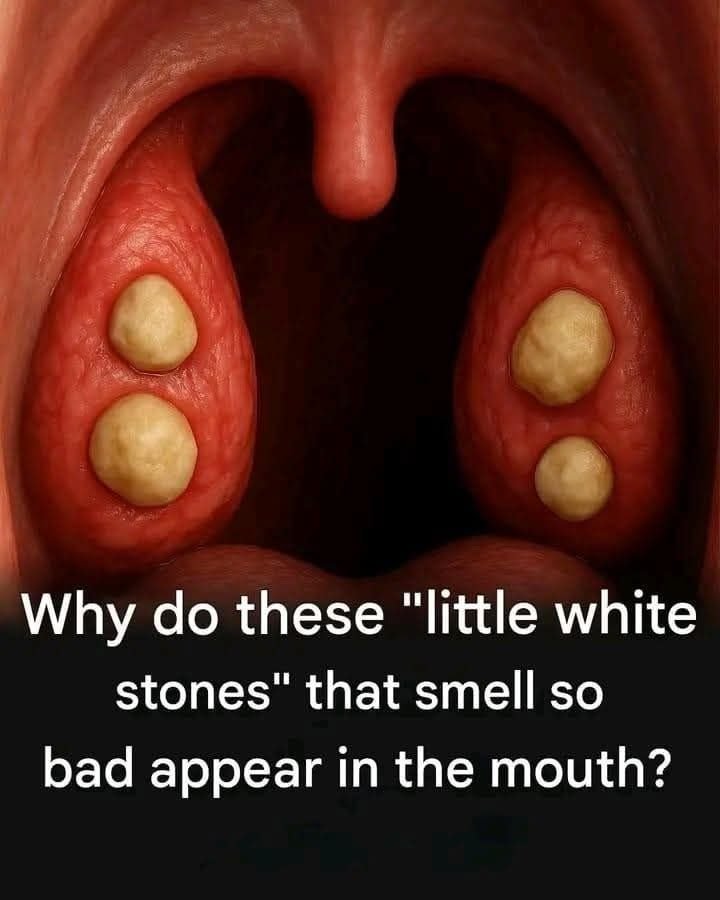
Those “white stones” are most commonly tonsil stones, also called tonsilloliths.
They form when food particles, dead cells, mucus, and bacteria get trapped in the crevices of the tonsils and harden over time. Bacteria break this material down and release sulfur compounds, which is why tonsil stones often cause bad breath.
Common signs include:
- Small white or yellowish lumps in the tonsils
- Persistent bad breath
- A bad taste in the mouth
- Sore throat or the feeling that something is stuck
- Ear discomfort (referred pain)
How to manage or prevent them:
- Maintain good oral hygiene (brush, floss, clean the tongue)
- Gargle with salt water or mouthwash
- Stay well hydrated
- Use a water flosser on a gentle setting
- In recurring cases, an ENT specialist can help; rarely, tonsil removal is considered
They’re usually harmless, but if they’re painful, frequent, or accompanied by infection symptoms, it’s best to see a doctor or dentist.